


 Chirurgie
  Treatment by our surgeon
Anesthesia
Twilight sleep

Downtime
2 weeks 24h-3 days head bandage 4 weeks no sport
Testimonials
Rates
-
Facelift from 12'000 CHF
Price list indicative and valid as of September 1, 2024.
Discounts subject to conditions, cannot be combined with other offers or subscriptions.
Payment in instalments in collaboration with Swissbilling, subject to their approval and available in clinics only.
Treatments
Further information
All medical treatments require prior consultation. A personalized estimate can be drawn up following this consultation.
The skin, especially that of the face, loses elasticity during the normal ageing process and the muscles of the subcutaneous fatty tissue become increasingly slack. Small wrinkles form more frequently and increase in depth, particularly around the eyes, lips, cheeks and neck. Our lifestyle, environmental factors such as stress, poor diet and particularly intense sunlight and nicotine have an additional influence on these signs of ageing.
Especially in the case of sagging cheeks or a flabby neck, a lift can bring about a significant improvement, combined with a natural result that makes you appear several years younger.
Advantages of a facelift at the prevention center
- Years of experience with the facelift
- In-depth consultation & planning of the procedure
- Preservation of natural facial contours thanks to individually tailored treatment techniques
- Use of the latest treatment methods
- Highest hygiene & quality standards
- Use of self-dissolving threads
The facelift
The facelift leads to a rejuvenated appearance, especially when excess loose skin or fat deposits are removed. Muscle tightening can support this effect, but the loss of elasticity is not completely eliminated, so fine laugh lines or wrinkles can form again on the sides of the temples. However, they are less noticeable than before the operation. Lateral differences, which exist in every person, can also cause slightly different scarring or skin wrinkles after the operation.
How many years can you rejuvenate?
Depending on the previous findings and surgical technique, a lift can rejuvenate the body for around 8-10 years.
How long does a facelift last?
Depending on the skin, connective tissue and age of the client, you can benefit for 10-15 years.
Can a facelift be repeated?
Yes, after approx. 10 years, or earlier depending on the technology (S-Lift).
Aims of a facelift
A facelift can help to correct the following problem areas, among others:
- Thinker’s forehead
- Smile lines
- Cheek wrinkles
- Nasolabial fold
- Lip wrinkles
- Hanging cheeks
- Neck folds
- Neck muscle cords
To maintain a natural look and prevent a mask-like face, not all wrinkles can be smoothed out.
Eyelids, the center of the forehead and lip wrinkles cannot be smoothed out with a facelift either.
eyelid lift
) must follow at the same time or subsequently.
The facelift procedure
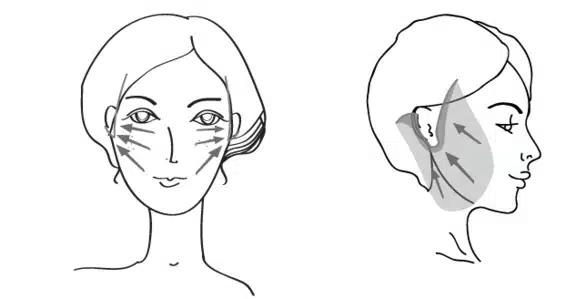
An S-lift can achieve a clearly recognizable tightening of the facial features and thus a rejuvenation of the appearance without large visible scars behind the ears and in the area of the temples. The excess skin is removed, the subcutaneous fatty tissue is suctioned out if necessary and the muscles and connective tissue (SMAS) are tightened. With the S-lift, the mouth, chin and neck areas in particular are treated. The hair on the head no longer needs to be cut or shaved. There will be no hair loss, as is the case with a major lift. The ugly scars behind the ears are also reduced. Complications with the S-Lift are very rare and success is much more certain. Clients are able to socialize and work much more quickly.
As a rule, we prefer a face lift with a neck lift in order to respect anatomical units. The incision is made in front of the ear, but is usually almost invisible after a few weeks. For men, it depends on the individual situation, as the scar may be visible for longer. Ultimately, the result of a face-neck lift is significantly more advantageous.
Before the facelift operation
In an individual consultation, the objectives and course of the procedure as well as your personal health history are discussed.
You are not suitable for facelift surgery if you…
- suffer from metabolic disorders (e.g. diabetes) or important organs (e.g. heart, circulation, nervous system, liver, kidneys, thyroid, lungs).
- an acute or chronic infectious disease (e.g. hepatitis, HIV/AIDS),
- Allergies or hypersensitivity reactions,
- have a blood disorder or an increased tendency to bleed.
- are prone to the formation of blood clots (thrombosis, embolism), abscesses, fistulas, severe scarring (keloid), suppuration and delayed healing.
Treatment procedure for a facelift
After the consultation, you must be mentally and physically ready for this procedure, as it is an irreversible result. This means that it cannot be reversed. You must arrive for the procedure sober and without make-up. An overnight stay in the clinic is sometimes necessary for your safety. Depending on the extent of the procedure, twilight sleep may be required. The face will also be locally anesthetized. You should not feel any pain during the procedure in twilight sleep.
Antibiotic shielding is only a precautionary measure, as fortunately infections rarely occur during the S-Facelift. The client will be connected to electronic measuring devices that constantly monitor heart activity (ECG), pulse, blood pressure and blood oxygen saturation.
An anesthesiologist is present to monitor your cardiovascular system (stand by). A 2-4 cm wide, 10 cm long, S-shaped piece of skin in front of the ears is cut out. Vessels and nerves are spared. If necessary, the fatty tissue can be suctioned out of the double chin or the hamster cheeks. The muscle tendon layer is then tightened and fixed. The skin is closed with a very fine suture, sometimes with staples.
Duration and anesthesia of the operation
A facelift is usually an operation that lasts several hours and requires close monitoring of the patient’s circulation and, if necessary, oxygen supply. Anesthesia such as local anesthesia is possible.
Facelift at the prevention-center Zurich
The facelift is performed in our operating rooms at Utoschloss Zurich. The consultation before the procedure takes place at the prevention-center Zurich.
After the facelift
You will wear a head bandage for 24 hours to 3 days after the procedure. After that, we recommend wearing a head cuff, especially at night. The wound pain is minor. We will provide you with painkillers. The pain will subside after 1-2 days. If the pain intensifies, you must inform us. Significant swelling and bruising in the area of the face must also be reported. The mobility of the mouth is somewhat limited in the first few days due to the pain, so we recommend liquid or soft food, which should not be too hot. The stitches do not need to be removed. The hair can be washed after 3 days. You can shower from the first day onwards, excluding the head area. Exercise or sport, sauna and sunbathing must be postponed for 4 weeks. You can return to work and other social commitments after two weeks.
Risks & side effects of facelift surgery
Scarring (keloids) after an S-lift is rare, but cannot be ruled out. This complication can occur occasionally and is treated with ointments and injections. In 15% of cases, surgical scar correction may be necessary (free of charge). Sometimes wound healing disorders and wound infections can occur (e.g. in smokers and diabetics). Infections have become very rare in recent times. Nevertheless, we administer an antibiotic to prevent them. Very rarely, bruising may occur. This will be surgically removed if necessary. Nerve or vascular injury is very rare. A loss of sensation in the cheeks is rare but possible. This condition will only last a few months, if at all. In rare cases, necessary touch-ups (small scar corrections and liposuction) are free of charge.
- Bleeding into the skin, muscles and fatty tissue, which usually requires no treatment.
- Temporary irritation of the skin caused by disinfectants, drying out or touching, which usually subsides on its own.
- Concomitant medical treatment may be necessary as a result of swelling of the fatty body or connective tissue. However, these symptoms usually disappear again with general decongestant measures.
- Swelling and discoloration due to bruising, which usually disappears on its own; elevation and cooling help here. However, swelling can also cause temporary damage to facial nerves. This can reduce or increase sensitivity over several months. In very rare cases, there may also be a loss of muscle function with signs of paralysis, which may require surgical correction.
- Hematomas and postoperative bleeding, even a few days after the procedure, usually do not require any treatment, however; only in individual cases is surgical hemostasis necessary.
- Softening of the wound edges under mechanical stress, e.g. when doing hair; this can have an unfavorable effect on scar formation and in very rare cases may even make scar correction necessary. Reduced blood flow can also lead to so-called necrosis (tissue death), which can mean longer wound treatment or follow-up surgery.
- During local anesthesia or intravenous administration of a hemostatic drug during anesthesia, in very rare exceptional cases, material intolerance to the anesthetic (itching, swelling, also circulatory reactions up to shock), allergic reactions, side effects in the central nervous system (respiratory disorders, restlessness, cramps), drop or increase in blood pressure, slowing of the heartbeat and cardiac arrhythmia may occur. However, these undesirable side effects only occur in extremely rare exceptional cases.
- Rare inflammatory reactions of the wounds, especially when sutures are embedded in muscles; this can prolong the duration of treatment.
- Scars: The operation cannot be performed without leaving scars. However, they are placed in skin folds in such a way that they are as inconspicuous as possible and easy to close. The natural redness of a fresh suture disappears after 2-3 weeks, but can last for several months in individual cases. Small skin cysts can develop in the scar area, which are easy and simple to treat.
- Disorders of scar formation: bulging, painful and itchy scars can develop (scar proliferation, keloid). These scar growths also usually disappear with conservative treatment, so that further operations are rarely necessary.
- Severe scarring in the skin and muscles practically only occurs with years of nicotine abuse and severe bleeding without inflammation. Scarring of the lower eyelid after such a complication often has to be improved by a repeat procedure.
- Overcorrection: Excessive skin removal or scarring after inflammation can lead to disorders. The skin tension will improve spontaneously in the first few weeks after the operation, but surgical correction will be necessary if the problems persist.
- This can lead to a cosmetically inadequate result, which can be corrected by another operation if necessary.
- Bruising – some colleagues therefore leave a drain in the chin area for the first few days. Tension in the face. This can be the reason for short-term hair loss in the suture area (e.g. after severe bruising). Normally there is no tension on the skin.
- If smokers do not significantly or completely reduce their nicotine consumption, this can lead to wound healing disorders.
- Infection in the hair area. Poorly healed wounds can leave a wide scar. Damage to the muscle nerve. Regeneration usually takes 3-6 months.
More information about the facelift in the video
https://player.understand.com/drkoehler/en/4d07e4b8-dfd0-4bf2-bea8-3aaf1af34237/627bad27-d74c-47b8-a80f-e92d08a8913e
Frequently asked questions about the facelift
General information about the facelift
Who is a facelift suitable for?
With a facelift, wrinkles can be smoothed and sagging skin can be repositioned. A facelift is therefore suitable for all customers who want a younger overall appearance and smoother facial skin.
At what age does a facelift make sense?
A facelift should not be performed at an advanced age, but is advisable from the age of 45. The change from the outside world remains subtle and the result is retained for many years.
How long do the results last after a facelift?
The results of a surgical facelift are usually permanent, but can be influenced by external factors such as stress, nicotine and alcohol consumption, or natural skin aging.
How often can a facelift be repeated?
A facelift can be repeated as often as required, but in practice this is rarely necessary. A repeat facelift is requested by clients who, for example, suffer from slightly sagging skin again 15 years later due to normal skin ageing.
What are the risks of a facelift?
The greatest risks, which only occur very rarely, are skin death, circulatory disorders or nerve injuries. In some cases, the corners of the mouth may droop temporarily after the facelift due to the after-effects of the local anesthetic. Otherwise, swelling, redness and bruising may occur after the procedure, the severity of which depends on the individual. Of course, a facelift also results in a scar, which will be more visible at first, but which we check regularly and which will heal over time with the appropriate scar care and later be very inconspicuous. A lot will change in the first four weeks after the facelift, especially in terms of how you feel when you speak and laugh.
Procedure of a facelift
What types of facelift are there?
The most common form of facelift is the midface lift, in which the cheeks are lifted or nasolabial folds are smoothed out, for example. For more extensive forms, the forehead and neck region can also be additionally tightened, creating particularly natural results.
What do I need to consider before a facelift?
Good planning is essential before a facelift. You should plan who can pick you up from our clinic after the procedure, whether you have enough cooling material at home and whether you have done your shopping and other obligations for the time being. This is the only way you can approach the operation calmly and later start your aftercare in a relaxed manner. Please also come to our clinic on the day of treatment in comfortable clothing.
How does a facelift work?
The operation takes around 3 – 5 hours and is often performed in combination with other procedures, such as eyelid lifting or wrinkle injections. It is important to take enough time for the facelift, as not only should the individual parts of the face be tightened, but the symmetry of the face must also be maintained. Nowadays, the inner layer of tissue is tightened during a facelift and the skin is then placed back over it. Among other things, this makes the result last longer. Afterwards, our customers are given a dressing and valuable tips on conscientious aftercare.
Aftercare of a facelift
When are you socially acceptable again after a facelift?
After a facelift, we advise our clients to take it easy for about 1 – 2 weeks. There may also be temporary swelling, redness or hematomas. After two weeks, clients are fit for social life again after a facelift.
When are the stitches removed after a facelift?
As a rule, sutures are no longer necessary after a facelift. Most sutures are self-dissolving, which makes aftercare more comfortable for the client.
What do I need to consider after a facelift?
After the facelift, you should eat soft foods and make sure that your food is neither too hot nor too cold. You will wear a bandage for the first 24 to 48 hours after the operation and the movement of your head will be somewhat restricted. Your upper body should be elevated and you should carefully follow the medication we prescribe.
When can I do sports again after the facelift?
In the first few weeks after a facelift, you should completely avoid sport and physical exertion. Approximately four weeks after the procedure, you can resume most types of sport and slowly increase them, but you should wait up to six weeks after the procedure before taking part in contact and team sports.


